Sep 15, 2013

Theme 1 - Wealth Inequality in The United States


Whatch this video and answer the following questions:
1.   What is the method used by the Harvard’s professor to carry out the survey?
2.   What is the question asked to the interviewed people?
3.   What would be the ideal distribution of wealth in the US?
4.   What is the reality for two bottom categories?
5.   What was the American wealth in 2009?
6.   Why does the speaker think socialism won’t work?
7.   How much richer are the better-off in the ideal of the American people?
8.   What happens to the poorest in reality? And the middle class?
9.   How much do the 1% richest have?

Apr 13, 2013

Theme 3 - Cities and sustainable development - Speaking Presentations


Group work activity:
Prepare a speaking presentation on your city!
It will include a visual presentation.
 Explain its main features and development towards sustainability:

-     Housing, transportation, waste management, water, vegetation and so on

-     The main problems / challenges linked to these projects.

Give your point of view: Is this city really developing sustainably or not? To what extent? (think of the three dimensions of sustainable development -environmental/ social/ economical)

You will find some Internet links below:


Work assesment:

Organisation and Content - 5 points:
clear organization and layout / accuracy of information / good sharing-out of the work

Visual Presentation - 5 points:
clear presentation / relevance and variety of documents / Use of English

Speaking during presentation - 10 points:

Fluency / pronunciation / speaking and not reading / Use of English
 

Nov 29, 2012

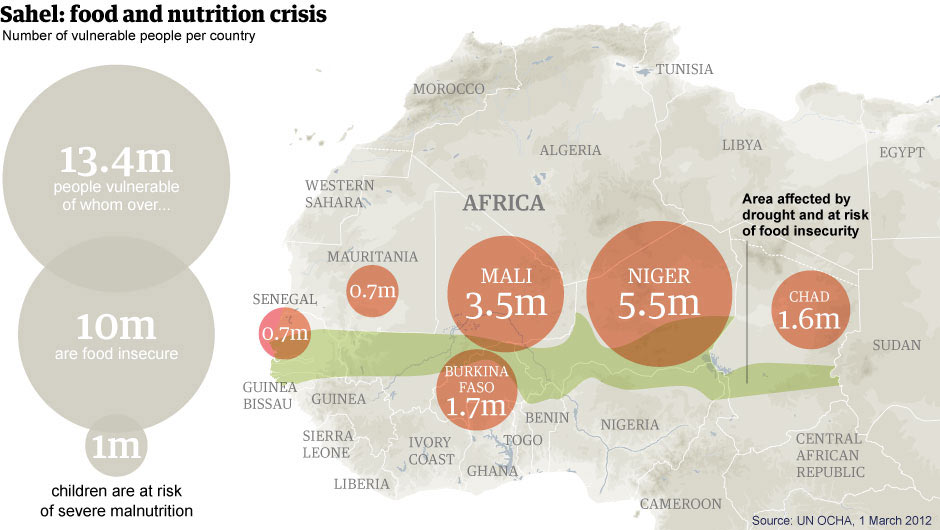
Theme 2 - Sahel food crisis mapped

More than 13 million people are at risk of hunger in west Africa, as drought, high food prices and conflict have pushed malnutrition levels above emergency thresholds in some areas


guardian.co.uk,

Nov 11, 2012

Theme 1 - What does Sustainable development mean?


Raised in Vancouver and Toronto, Severn Cullis-Suzuki has been camping and hiking all her life. When she was 9 she started the Environmental Children's Organization (ECO), a small group of children committed to learning and teaching other kids about environmental issues. They were successful in many projects before 1992, when they raised enough money to go to the UN's Earth Summit in Rio de Janeiro. Their aim was to remind the decision-makers of who their actions or inactions would ultimately affect. The goal was reached when 12 yr old Severn closed a Plenary Session with a powerful speech that received a standing ovation.


Severn Suzuki speaking at UN Earth Summit 1992

1.   What organization does she speak for?

2.   What is she fighting for?

3.   What is she afraid of?

4.   Why doesn’t she go fishing anymore?

5.   What has she dreamt of?

6.   What does she want the adults to realize?

7.   What are the four different environmental problems she talks about?

8.   How many people were there in the world at that time?

9.   How many species does she mention?

10.               What kind of bad habit from her country does she denounce?

11.               What are we afraid of?

12.               Why was she shocked when she arrived in Brazil?

13.               What does she want the northern countries to do?

14.               What are the main things she was taught at school?

15.               What is the sentence her father keeps telling her?


Sep 23, 2012

Theme 1 - Wrong development - UK families in poverty


Save the Children launches campaign to help UK families in poverty
 
Abridged version from http://www.guardian.co.uk/society/2012/sep/05/save-the-children-uk-campaign?INTCMP=SRCH


The international aid charity Save the Children – best known for its work with starving youngsters in Africa – has launched its first domestic fundraising appeal, asking the public to dip into their pockets to help UK families plunged into poverty by cuts and the recession.
The charity is seeking to raise £500,000 to help children across the UK, many from low-paid working families, who it says are going without hot meals, new shoes and winter clothes, and missing out on school trips, toys and treats because their parents cannot afford the rising cost of living.
While the appeal target is modest compared to Save the Children's international humanitarian appeals, the campaign will be seen as a symbolically significant attack on what the charity says is the coalition's failure to tackle mounting poverty, hardship and inequality in the UK.
Launching its appeal, which bears the slogan “It Shouldn't Happen Here”, the charity said: "It is shocking to think that in the UK in 2012, families are being forced to miss out on essentials like food or take on crippling debts just to meet everyday living costs."
Save the Children plans to spend money raised on its Eat, Sleep, Learn, Play programme, which gives cookers, beds and other essential household items to families living in poverty, and its Fast scheme, which helps low-income parents to provide at-home educational support to their children.
Although families below the poverty line (£17,000 a year household income) are worst hit, working families on "modest" household incomes are increasingly struggling to make ends meet as they attempt to cope with shrinking incomes, soaring food and energy costs, and cuts to welfare benefits and public services, says the report.
Save the Children is calling on ministers to encourage more employers to adopt the living wage currently set at between £7.20 and £8.30 an hour, provide extra childcare support for low-income parents, and modify the planned universal credit welfare system to allow parents to keep more of their earnings before benefits are withdrawn. The charity's Shouldn't Happen Here report is the second high-profile study by an international aid charity to focus on domestic poverty in recent months. Oxfam's Perfect Storm, published in June, said that cuts and rising living costs were threatening to return the UK to levels of inequality not seen since Victorian times. An Oxfam spokesman said: "We have never done an appeal in the UK, and we should never have to do an appeal in the UK, but you can never rule it out”.
 
Read the text and answer the following questions
(justify your answers by quoting the text)
1.       What is the aim of this fundraising appeal?
2.       Why is the appeal so special?
3.       What is the poverty line in the UK?
4.       What are the main problems faced by the poorer families?
5.       What measures the charity would like the government to take?